

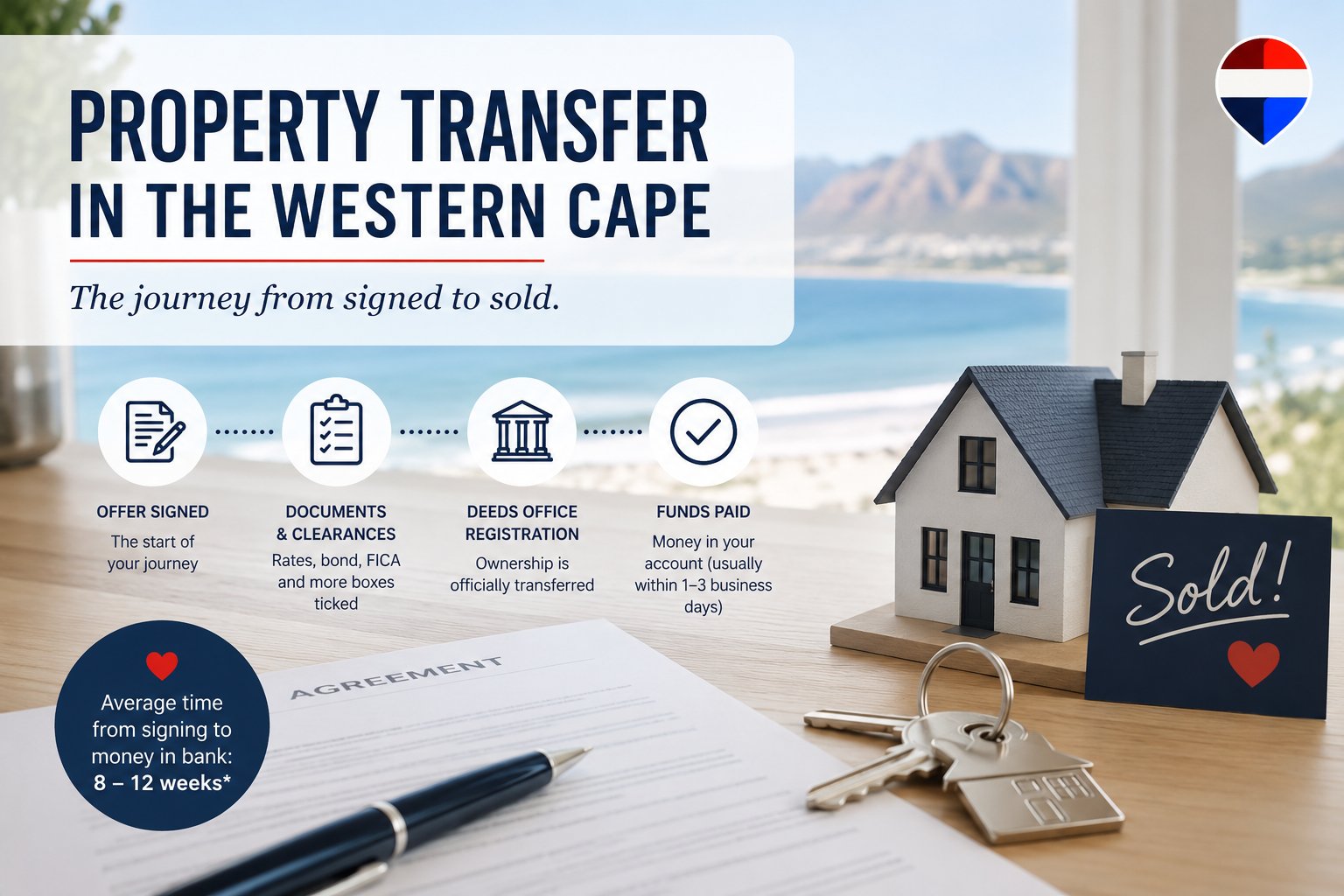
Once an Offer to Purchase is signed, many sellers imagine a convoy of attorneys sprinting towards the Deeds Office, but the reality is a little less dramatic. Before ownership can change hands, there are a surprising number of boxes to tick: the bond cancellation (if you have one), municipal rates clearance, transfer duty or VAT, FICA compliance, and plenty of paperwork. Only once everything is in place can the transfer be lodged in the Deeds Office.
In the Western Cape, the average transfer takes around 6 to 12 weeks from the date the sale agreement is signed, although delays can occur if documents, finance or clearance certificates take longer than expected. Once the property is registered in the buyer's name, the transferring attorney usually pays the seller's proceeds into their bank account within one to three business days, after settling any outstanding bond and costs.
Q: I sold my property to a cash buyer. Will the transfer be faster?
Usually, yes... but not by as much as you might think.
A cash sale removes the time needed for the buyer's bond approval, which can shave a couple of weeks off the process. However, you'll still need municipal clearances, compliance certificates (where applicable), bond cancellation (if you're bonded), and Deeds Office registration. In other words, cash buyers may skip one queue, but they don't neccessarily get a VIP pass to the front of all of the others.
The good news? An experienced estate agent and conveyancer will keep the process moving, keeping you informed until the happiest notification of all arrives: "The funds have been paid into your account."